
13396532368

CONTACT US
Advantages of Silicon Carbide (SiC) Ceramic Membrane Modules in Drinking Water Treatment
1. Exceptional Mechanical Strength and Hardness
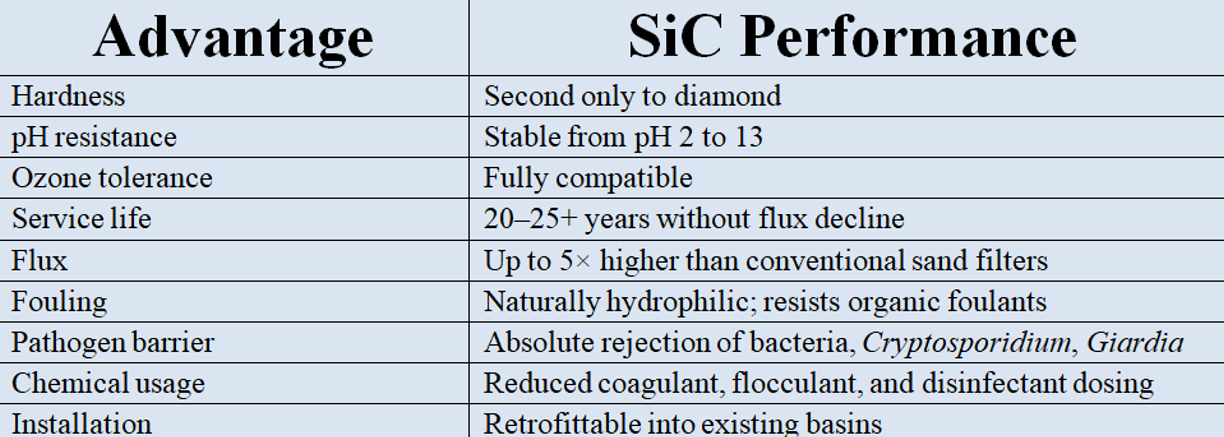
After diamond, silicon carbide is the hardest material known to man. This extraordinary hardness translates directly into structural robustness in membrane modules. SiC membrane elements resist cracking, deformation, and abrasion under the mechanical stresses of backwashing, air scouring, and high crossflow velocities — all of which are routine operating procedures in drinking water treatment plants. SiC was chosen for membrane applications owing to its properties, which include high strength, high hardness, low thermal expansion, excellent thermal shock resistance, and chemical inertness.
2. Outstanding Chemical Resistance
Unlike polymeric membranes — which are prone to degradation, pore collapse, and loss of hydrophobicity when exposed to heat or corrosive media — ceramic materials such as alumina, zirconia, and silicon carbide retain their structural integrity and functional properties even in extreme environments. For drinking water treatment, this has very practical implications. SiC membranes are chemically inert, sustaining pH between 2 to 13 and can withstand strong oxidising compounds such as ozone. This ozone compatibility is especially important: ozone is a powerful disinfectant and micropollutant oxidant increasingly used in advanced drinking water treatment, and SiC membranes can be integrated directly into ozonation-filtration hybrid systems without risk of membrane degradation. Polymeric membranes would be destroyed under similar conditions.
3. Natural Hydrophilicity and Superior Antifouling Performance
One of the most strategically important advantages of SiC membranes over competing materials is their inherent surface hydrophilicity. One of the key advantages of SiC membranes, compared to any other organic or alumina ceramic membrane, is their natural hydrophilicity, which attracts water while repelling organic foulants. This reduces membrane fouling, improving filtration efficiency and reducing cleaning requirements. The mechanism behind this behaviour is well understood at the molecular level. SiC itself is a hydrophilic material; the pristine SiC membrane is fabricated with a post-oxidation step, so the surface of sintered particles is covered with a thin layer of SiO₂, which renders higher hydrophilicity due to the hydroxyl groups present on the surface of the SiO₂ network. These surface hydroxyl groups attract water molecules, forming a stable hydration layer that physically prevents organic foulants — such as natural organic matter (NOM), proteins, and biofilm precursors — from adhering to the membrane surface.
4. High and Stable Permeate Flux
Sustained permeate flux is a key economic driver in membrane-based water treatment, as it determines the membrane area — and therefore capital cost — needed to achieve a given production capacity. SiC membranes consistently deliver higher flux compared to polymeric and conventional ceramic oxide membranes, even at equivalent or lower transmembrane pressures.
5. Absolute Physical Barrier Against Pathogens and Contaminants
The unique properties of SiC, which is derived from sand, enable it to act as a physical barrier for particles, microorganisms, bacteria, and even emerging contaminants such as PFAS and pesticides. Unlike chemical disinfection methods, which rely on dose and contact time and can produce harmful disinfection by-products (DBPs), the physical barrier nature of SiC UF membranes provides absolute, dose-independent rejection of particulate pathogens including Cryptosporidium, Giardia, and bacteria.
6. Long Service Life and Whole-Life Cost Advantage
After multiple years of operation, SiC membranes show no signs of degradation and no decline of membrane permeability, vastly improving whole-life cost. The 25-year whole-life cost is estimated to be significantly improved compared to the traditional alternative.
7. Consistent Water Quality Independent of Feed Conditions
A particular strength of SiC membranes in drinking water treatment is their ability to maintain permeate quality even under highly variable feed water conditions — storm events, algal blooms, turbidity spikes — that challenge conventional treatment. SiC membranes consistently produce water that meets and exceeds regulatory standards independent of feed water quality.
8. Easy Retrofitting into Existing Infrastructure
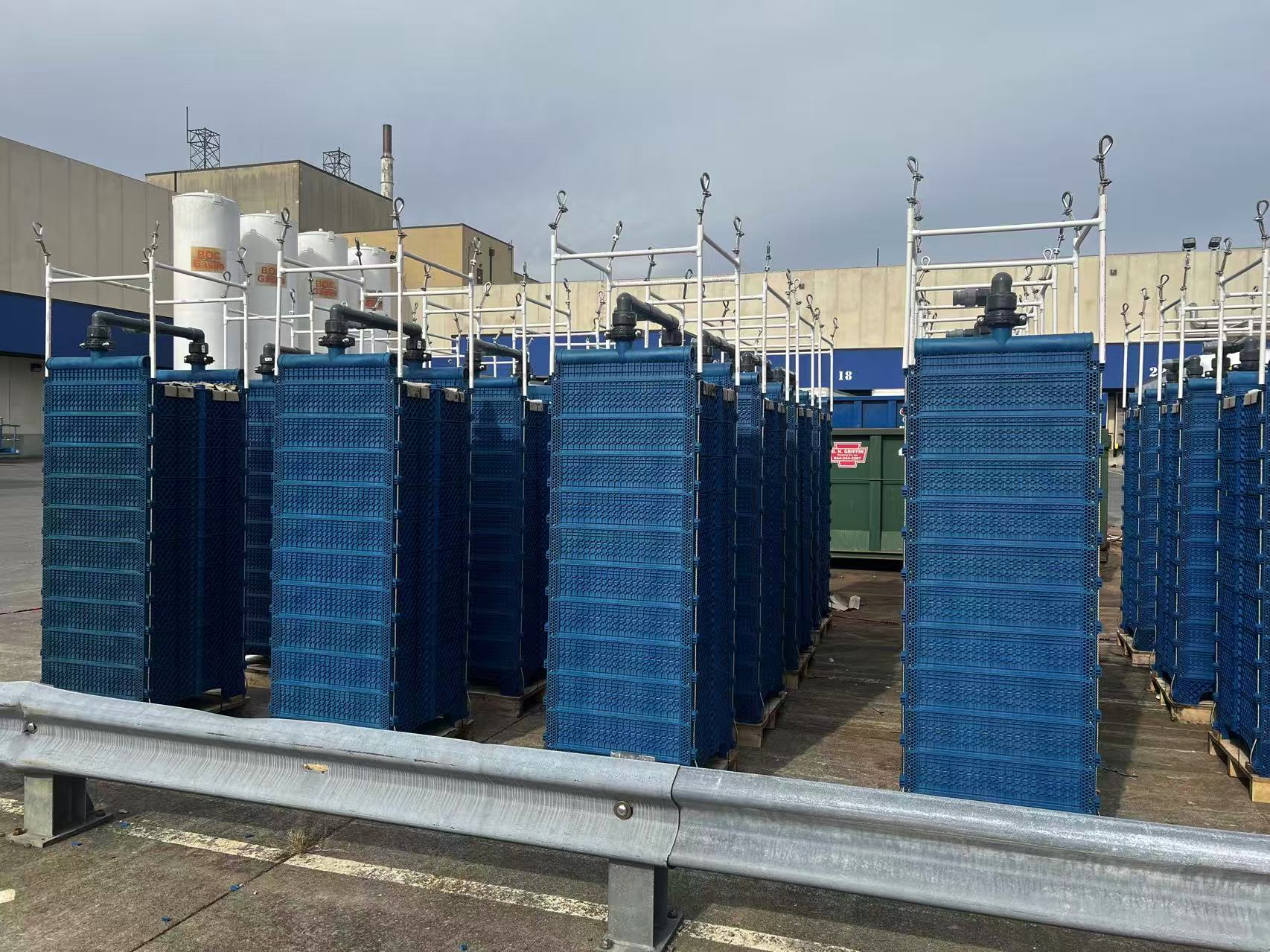
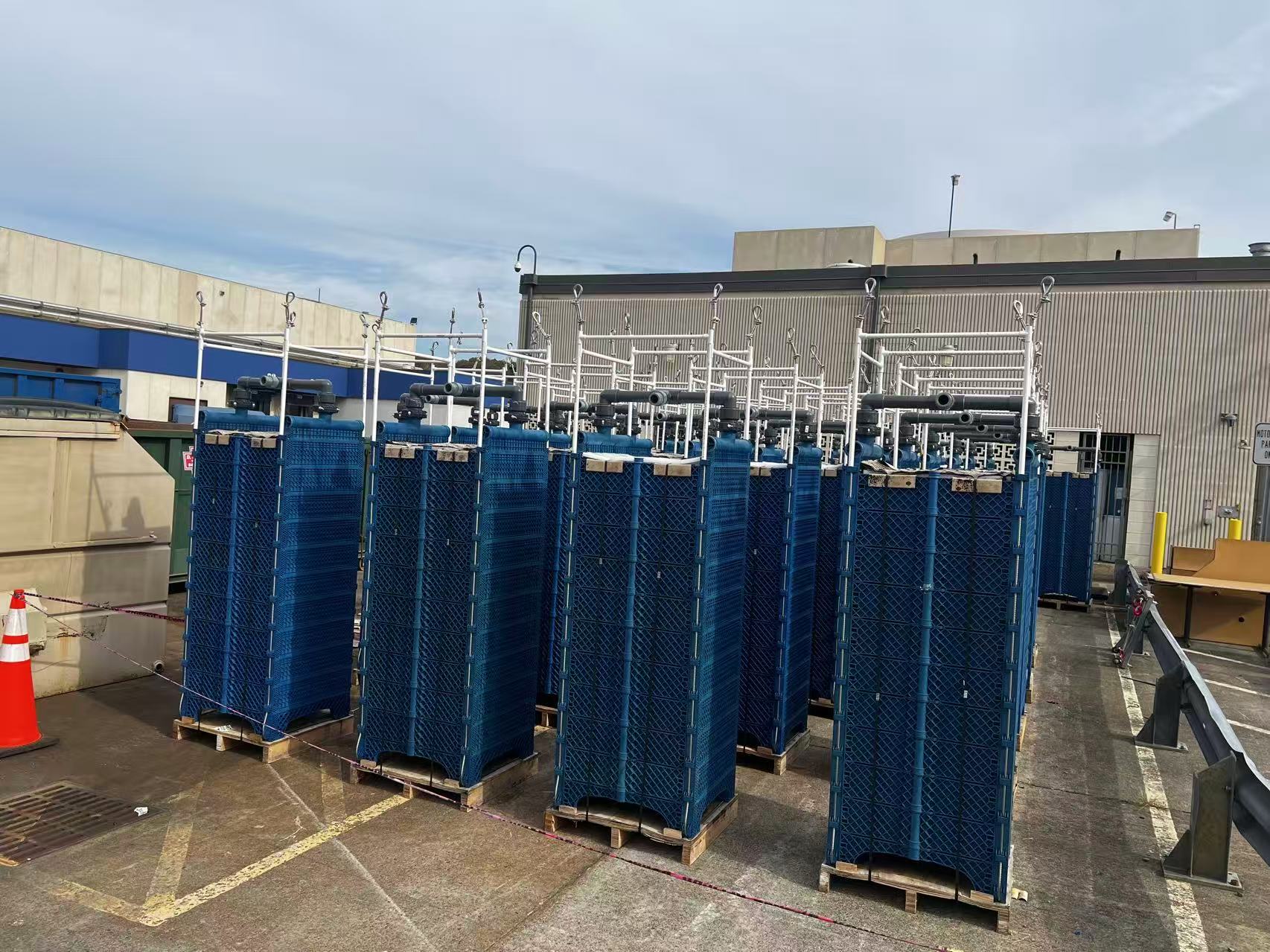
The filtration principle is submerged outside-in, where clean water is drawn through the membrane with suction pressure. Suspended solids and bacteria are rejected on the membrane surface forming a cake layer, while clean water passes through the membrane body and is collected at both end caps.
9. Operational Efficiency and Low Maintenance
The system uses periodic back pulse washing and air scouring to dislodge accumulated solids, ensuring extended filtration cycles between chemical-in-place (CIP) cleaning. SiC membranes are also mechanically robust, making them resistant to harsh mechanical and chemical cleanings.
10. Low Carbon Footprint
SiC can be installed in existing tanks available on site, reducing the need to build new concrete structures. This avoidance of new civil works significantly reduces the embodied carbon associated with a plant upgrade. Combined with lower energy consumption per unit volume of treated water (due to high flux at low transmembrane pressure) and reduced chemical dosing requirements, SiC membrane systems offer a meaningfully lower carbon footprint over their lifecycle compared to both polymeric membrane systems and conventional multi-stage treatment trains.
In summary, the advantage as below chart showed;