

13396532368





1. Introduction
Among the food industries, dairy is considered one of the most important sectors, requiring very large quantities of freshwater and generating large quantities of wastewater. The dairy industry generates approximately 2.5 litres of wastewater for every litre of milk processed, and this effluent contains high lactose content, dissolved and suspended solids, fats, and nutrients in the form of ammonia and phosphates.
A typical dairy industry in the European Union produces approximately 180,000 cubic metres of waste effluents characterised by high chemical oxygen demand (COD), biological oxygen demand (BOD), and total suspended solids (TSS), making them harmful to the environment if disposed of untreated.
Conventional biological and physicochemical treatment methods have shown limitations in this context. Several studies have found that COD removal using physicochemical methods is poor and the cost of chemical coagulants is high. Against this backdrop, membrane technology — and ceramic UF in particular — has attracted increasing scientific and industrial interest.
2. Characteristics of Dairy Wastewater
Dairy wastewater originates from multiple stages of production: milk reception, processing, cleaning-in-place (CIP) operations, and floor washing. Its composition is complex and varies by production type (cheese, yogurt, whey, butter), but common characteristics include:
High organic load: COD ranging from several hundred to several thousand mg/L
Fat, oils, and grease (FOG): Emulsified lipids from milk and cream processing
Suspended solids: Casein precipitates and milk proteins
Nutrients: Elevated nitrogen (ammonia) and phosphorus
Colour and turbidity: From pigments and colloidal particles
Variable pH: Fluctuating between acidic (from fermentation/cleaning acids) and alkaline (from CIP caustic solutions)
This variable, high-strength nature makes dairy wastewater a demanding application for any separation technology.
3. Ceramic Membranes: Materials and Structure
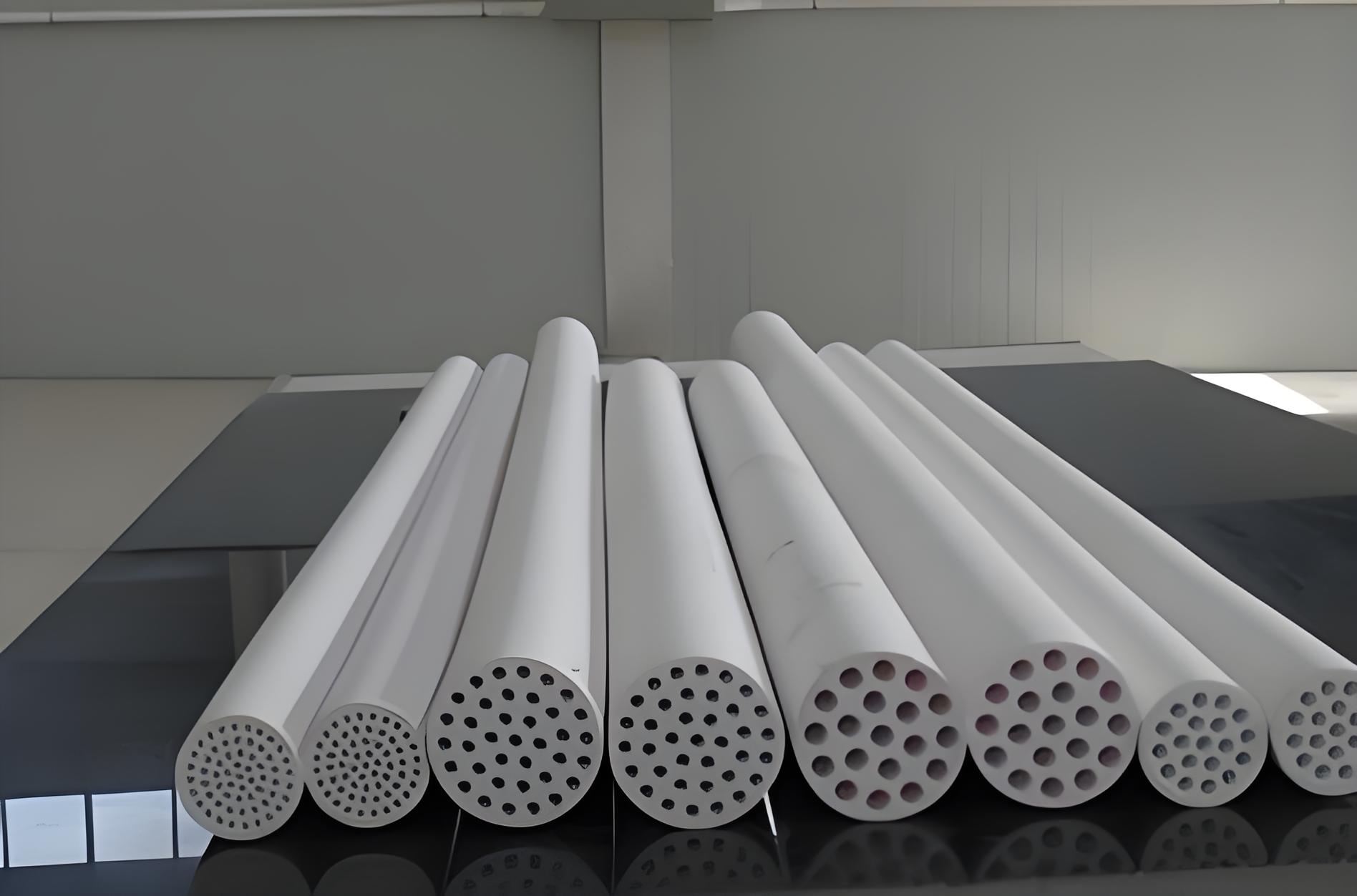
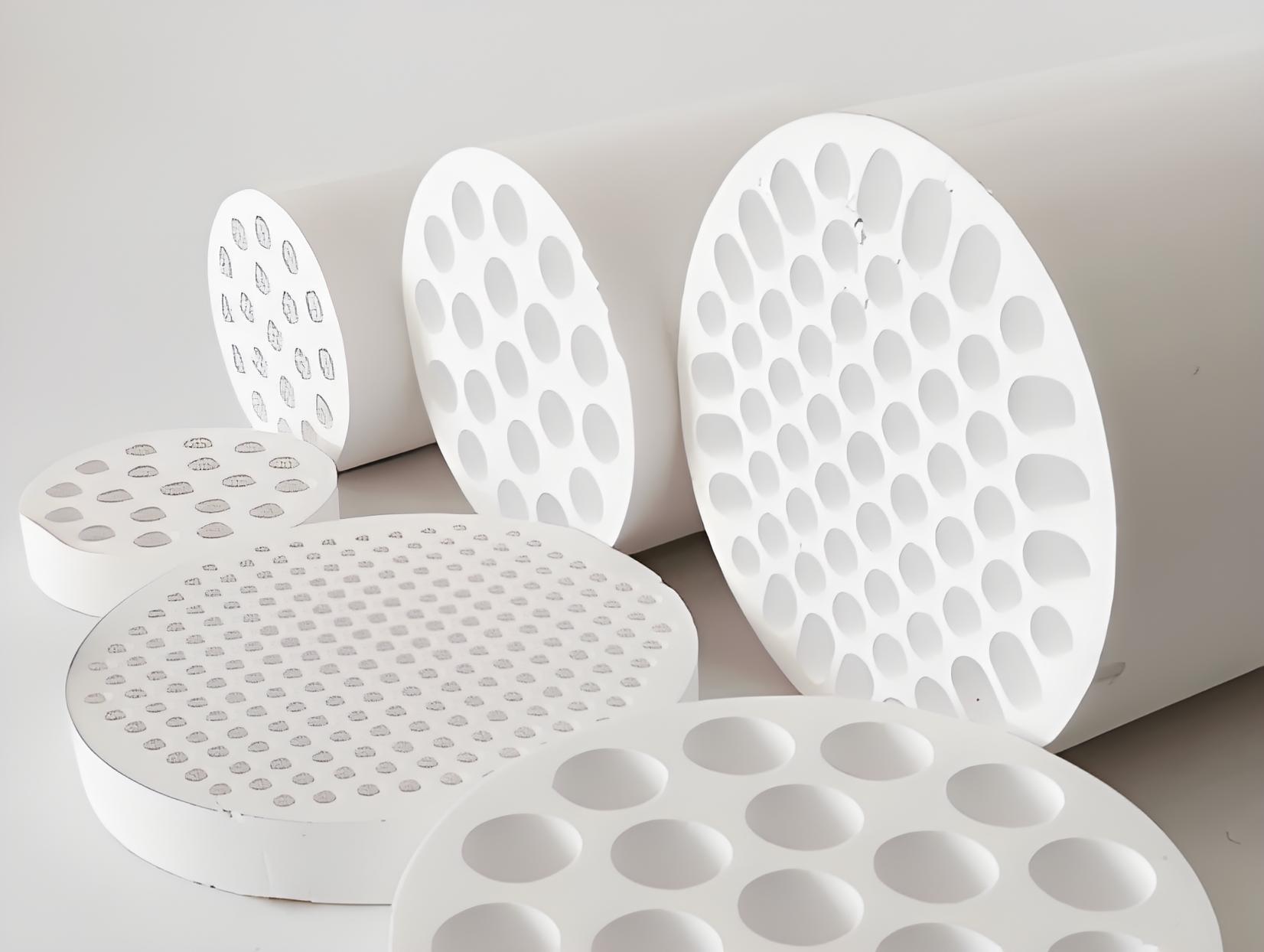
Ceramic membranes are manufactured using inorganic materials such as alumina, zirconia, titania, and silica, offering superior thermal stability, long operational life, and resistance to harsh operating conditions.
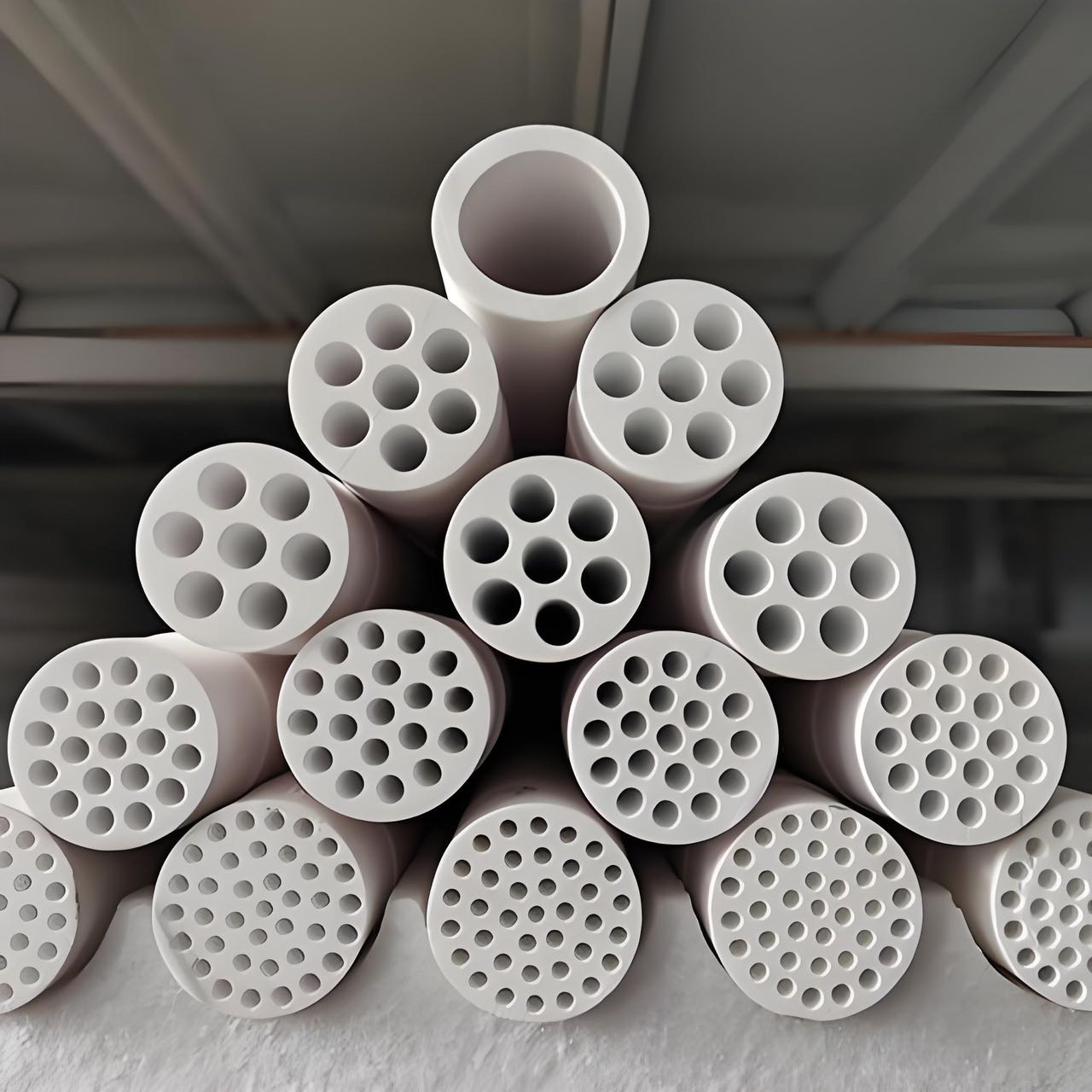
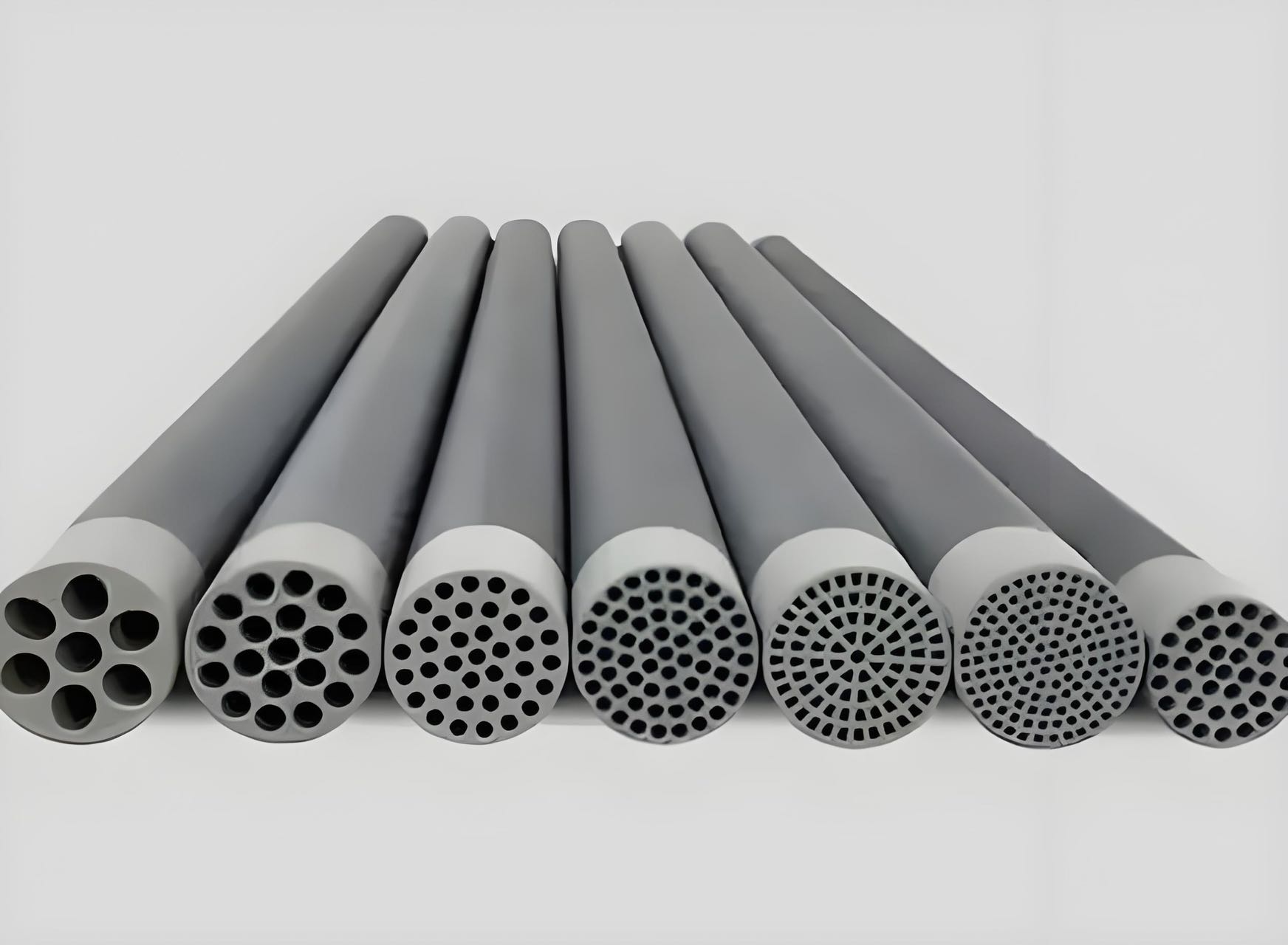
Commercially, ceramic UF membranes are produced in tubular or multichannel (monolithic) configurations. The membrane structure is typically asymmetric: a macroporous support layer provides mechanical strength, while thin intermediate and top layers with controlled pore sizes carry out the actual separation. Common top-layer materials include:
α-Alumina (Al₂O₃): Widely used, chemically robust, though somewhat brittle
Zirconia (ZrO₂): Excellent stability in acidic and alkaline environments
Titania (TiO₂): Photocatalytic properties useful for hybrid processes
Silicon carbide (SiC): Exceptional hardness and fouling resistance
While organic membrane materials are the least expensive, they suffer from a low degree of thermal, chemical, and mechanical strength, making them inadequate for harsh environments such as corrosive and high-temperature conditions. Inorganic (ceramic) membranes possess superior attributes and can withstand aggressive and frequent chemical cleaning, which is essential in many industries to maintain excellent hygiene standards.
4. Ultrafiltration Principles
Ultrafiltration (UF) is a low-pressure membrane filtration method used to purify, separate, and concentrate various types of water and wastewater to remove micron-sized particles. UF separates suspended solids and solutes of high molecular weight within the range of 0.01 to 0.1 microns, and can remove bacteria, viruses, colloids, proteins, pyrogens, and pathogens.
In a UF system, a feed pump drives the dairy wastewater across the membrane surface under pressure, splitting the stream into two fractions: the permeate (treated water passing through the membrane) and the retentate (concentrated stream of rejected contaminants). The operating pressure for ceramic UF in dairy applications typically ranges from 0.2 to 0.5 MPa, balancing permeate flux against energy consumption and fouling propensity.
5. Performance in Dairy Wastewater Treatment
Research consistently demonstrates high pollutant removal efficiencies when ceramic UF is applied to dairy wastewater.
A membrane filtration system using ceramic membranes operated at a pressure of 0.3 MPa achieved COD removal of 95 ± 1% by UF alone, and up to 99% in a combined MF-UF configuration. Colour removal across all ceramic membrane systems reached 96–98%.
Turbidity removal exceeded 99% under all tested conditions due to complete rejection of suspended solids. The two-stage MF-UF configuration achieved the highest pollutant removal and also produced an average permeate flux approximately 80% higher than direct UF alone.
In another study focusing on low-cost tubular ceramic membranes: the novel membrane achieved a maximum reduction in COD of up to 91% (135 mg/L) in the permeate stream, which is well within the permissible limit for wastewater discharge into the environment.
These results confirm that ceramic UF membranes can reliably meet discharge standards and, in many cases, produce effluent of sufficient quality for industrial reuse.
6. Membrane Fouling: Mechanisms and Control
Fouling — the accumulation of retained material on or within the membrane — is the principal technical challenge in dairy UF applications. In dairy wastewater, fats, proteins, and polysaccharides are the primary foulants.
Ceramic membrane fouling is governed by four main mechanisms: complete pore blocking, standard pore blocking, intermediate pore blocking, and cake filtration blocking. Organics, inorganic substances, and microorganisms can clog membrane pores and pollute the membrane surface, resulting in a decline in filtration efficiency.
In dairy applications, studies report that the cake filtration model best describes the dominant fouling behaviour, where a compressible gel layer of fat globules and protein aggregates forms on the membrane surface rather than simply blocking individual pores.
6.1 Strategies for Fouling Mitigation
Several strategies have proven effective:
Pre-treatment with microfiltration (MF): The most effective strategy to mitigate membrane fouling is the use of MF as a pre-treatment preceding UF. Not only was pollutant removal highest in the MF-UF configuration, but the average permeate flux was about 80% higher than direct UF.
Coagulation pre-treatment: Coagulation pre-treatment enhanced the performance of filtration by lengthening the filtration cycle by about 12% compared to direct UF, though it had no significant effect on total pollutant removal efficiency or permeate flux.
Cross-flow operation and backwashing: Operating in crossflow mode — where the feed flows tangentially across the membrane — reduces cake layer formation. Periodic backwashing with permeate or gas effectively restores flux.
Chemical cleaning: The issue of membrane fouling is of notable concern, given that pollutants can accumulate and obstruct membrane pores, resulting in a decline in filtration efficiency. Ceramic membranes withstand aggressive cleaning agents (caustic soda, nitric acid, enzymatic cleaners) far better than polymeric alternatives, enabling thorough regeneration of permeate flux without membrane degradation.
7. Advantages of Ceramic Over Polymeric Membranes
Ceramic membranes are superior to polymeric membranes in terms of useful lifespan, permeate flux, fouling propensity, cleaning efficiency, and environmental impacts.
Key advantages in the dairy context include:
Thermal stability: Can be operated at elevated temperatures (up to 300–400 °C), enabling hot-water sanitation as required in food processing
Chemical resistance: Withstands the aggressive pH swings (pH 1–14) and cleaning chemicals inherent to CIP procedures
Extended service life: The service life of ceramic membrane tubes can be extended to more than 8 years, greatly reducing replacement costs.
Lower long-term cost: Though higher in capital expenditure, ceramic membranes deliver lower lifecycle costs through durability and reduced frequency of replacement
8. Integrated and Hybrid Treatment Systems
For very high-strength dairy wastewaters or when high-purity reuse water is required, ceramic UF is typically integrated with other treatment steps:
Anaerobic pre-treatment → Ceramic UF: Biological treatment reduces organic load before membrane separation
Ceramic MF → Ceramic UF: Two-stage ceramic membrane systems achieve near-complete solids and colour removal
Ceramic UF → Nanofiltration (NF) or Reverse Osmosis (RO): UF can be used as a pretreatment before nanofiltration and reverse osmosis; pretreatment filtration processes protect the more sensitive NF or RO membranes to extend their lifetime and reduce the risk of fouling issues.
Such integrated systems allow dairy factories to achieve water reuse standards for applications ranging from cooling water to CIP process water.
9. Market Context and Future Outlook
The global ceramic membrane market was valued at USD 12.16 billion in 2025 and is projected to grow to USD 34.42 billion by 2034, at a compound annual growth rate of 12.25%.
The ultrafiltration segment is expected to contribute 32.7% of the ceramic membrane market share in 2025, owing to its advantages for high-purity separations.
Future research directions centre on three priorities: reducing membrane fabrication cost through the use of locally sourced natural clays and industrial waste materials; improving selectivity and permeability through nano-engineered top layers; and developing real-time fouling monitoring coupled with AI-driven predictive maintenance systems. Despite the dominance of polymeric membranes in the field, the constant pursuit of reduced production costs and the apparent benefits of ceramic membranes are fuelling their rapid growth.
10. Conclusion
Ceramic membrane ultrafiltration represents a highly effective, durable, and increasingly economical solution for dairy factory wastewater treatment. It consistently achieves COD reductions of 90–99%, near-total removal of suspended solids and turbidity, and effluent quality suitable for discharge or industrial reuse. The key technical challenge — membrane fouling — is best addressed through a two-stage MF-UF configuration combined with regular chemical cleaning protocols that ceramic materials can readily withstand. As manufacturing costs continue to fall and environmental discharge regulations tighten globally, ceramic UF membranes are poised to become the standard for dairy wastewater management.
References draw on published literature from Water, Air, & Soil Pollution (Springer); Journal of Water Process Engineering (Elsevier); Emergent Materials (Springer); Science Direct databases; and industry market reports (Fortune Business Insights, Coherent Market Insights