

13396532368





Single Village Water Supply Station
Single-village water supply stations are crucial facilities for providing safe drinking water to rural areas. They are characterized by their small scale, dispersed distribution, diverse water sources, and complex water quality. Traditional water treatment processes (such as sand filtration and slow filtration ) have limitations in handling complex water quality and ensuring water supply security. Silicon carbide membranes, with their advantages of high-efficiency filtration, fouling resistance, and ease of maintenance, offer an innovative and reliable solution for single-village water supply stations.
1.Compared with traditional water treatment processes
Traditional water treatment processes at single-village water supply stations typically remove organic matter and viruses through processes such as flocculation, sedimentation, filtration, and disinfection. The overall process is lengthy and slow, usually requiring multiple large structures such as sedimentation tanks and filtration tanks, making maintenance more difficult.
The silicon carbide ceramic membrane process is simple and direct. It utilizes standardized equipment with high integration, resulting in a smaller footprint for treating the same volume of water. The entire process eliminates the need for complex chemical additives and multi-stage treatment procedures, achieving high-efficiency filtration solely through the physical interception of the membrane. The equipment operates automatically, with a control system enabling one-button start/stop and online monitoring, significantly reducing operational complexity and maintenance costs.
II. Advantages of applying silicon carbide ceramic membranes in single-village water supply stations
1. Good water quality
The water quality meets the standards for direct drinking water, and some indicators even exceed those of European and American water quality standards. The turbidity of the produced water is <0.1 NTU, with 100% removal of bacteria, and a removal rate of 6 log for Giardia and Cryptosporidium, effectively ensuring the safety of drinking water microorganisms.
2. Stable effluent quality and strong resistance to shock loads.
natural disasters such as rainstorms and floods cause significant fluctuations in the quality of raw water , ultrafiltration membranes can ensure the stability of the effluent quality.
3. Short process, small footprint
The process is simple and compact, occupies a small area, uses standardized equipment, and has a short on-site construction cycle.
4. High throughput
With a throughput of up to 150-400 LMH, single unit output is high and efficiency is high.
5. Pollution resistance
Silicon carbide ceramic membranes have strong anti-scaling and antimicrobial capabilities, requiring no frequent chemical cleaning, and can operate stably even in areas where agricultural drinking water sources are limited.
6. Long lifespan
Silicon carbide ceramic membranes are formed by recrystallization and sintering of silicon carbide material, and have a long service life of 15-20 years or more. Frequent membrane replacement is unnecessary.
7. Simple operation and maintenance
Silicon carbide ceramic membrane technology equipment is automated, simple to operate and maintain, and requires low operator skill level.
III. Application Cases of Silicon Carbide Ceramic Membranes in Single-Village Water Supply Stations
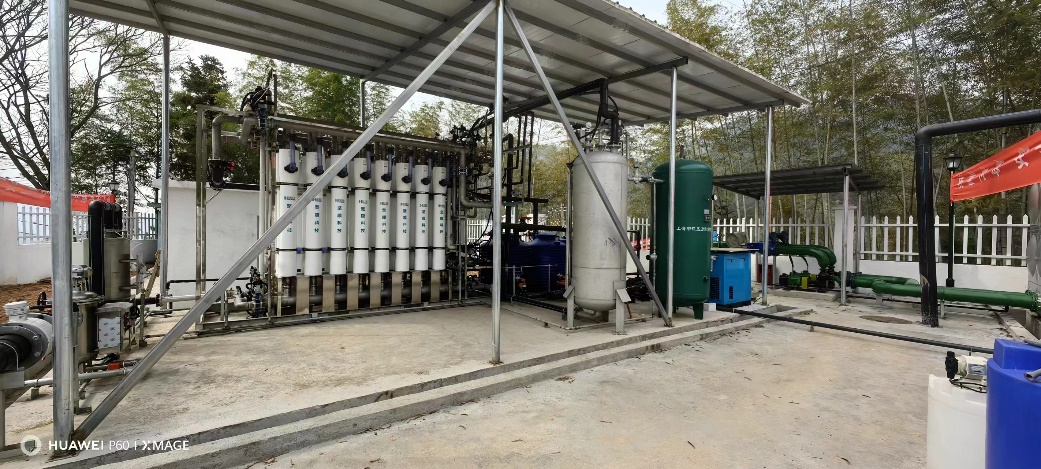
990m³/d Silicon Carbide Column Membrane Rural Drinking Water Expansion Project
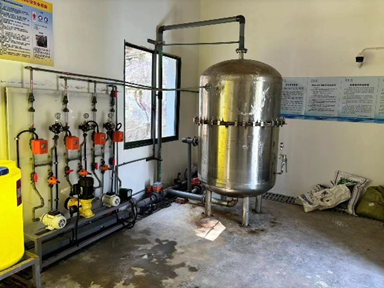
30m³/d Silicon Carbide Positive Pressure Flat Sheet Membrane Agricultural Drinking Water System Project
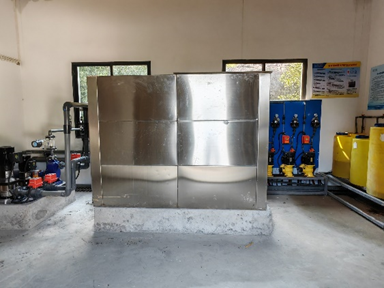
50m³/d Silicon Carbide Negative Pressure Flat Sheet Membrane Agricultural Drinking Water System Project
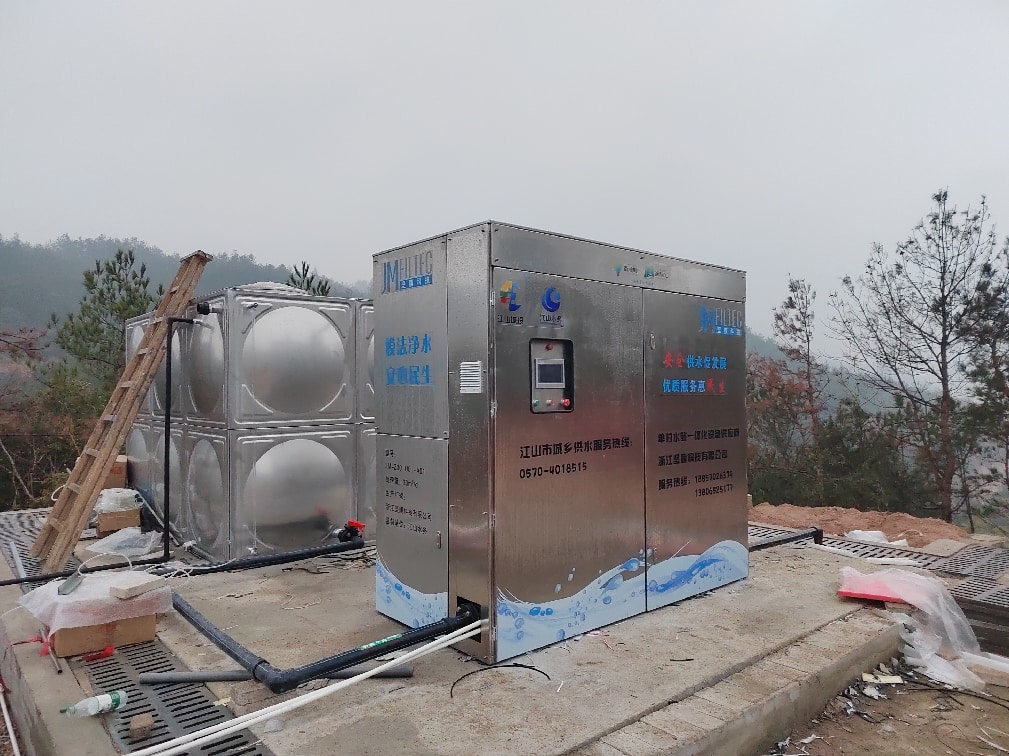
30m³/d Silicon Carbide Column Membrane Drinking Water Equipment Project