
18072885002





Introduction
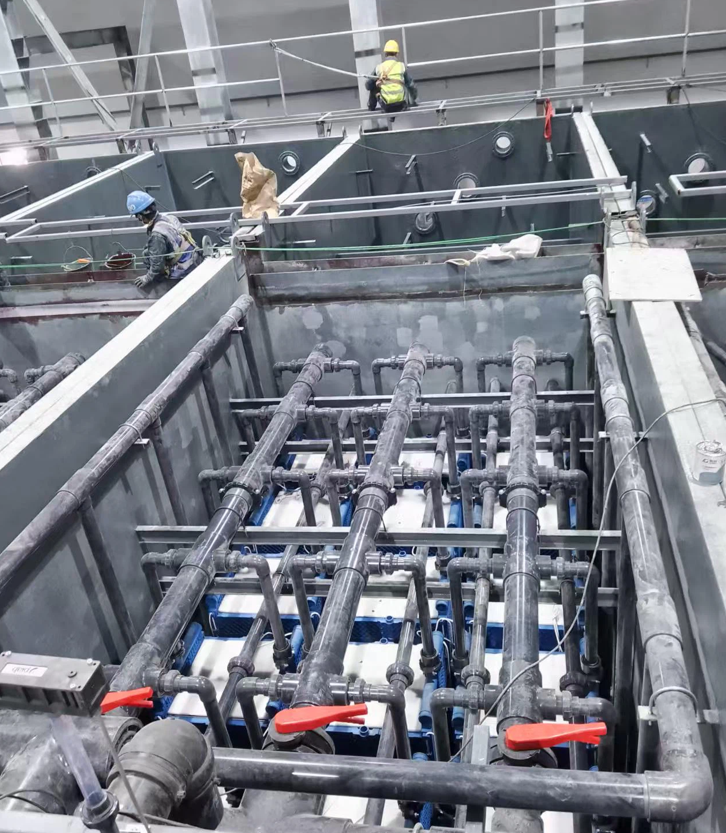
Water desalination is a crucial technological approach to alleviating freshwater shortages in coastal areas, and pretreatment is a key factor determining the stable operation of the system. Jianmo Technology's silicon carbide flat sheet membrane short-process pretreatment technology, with its outstanding advantages such as high-efficiency separation, resistance to fouling, and corrosion resistance, has been successfully applied in several large-scale seawater desalination projects. Taking a high-value fish farming base seawater desalination project as an example, the first phase of the project has been operating stably for four years, and the second phase was recently completed and put into operation, further validating the maturity and reliability of the short-process technology in the field of seawater desalination.
This article focuses on the second phase project, while also showcasing the stable operation results of the first phase.
Project Basic Information
Application Type: Seawater Desalination Pretreatment
Application Product: Jianmo Technology - Silicon Carbide Flat Sheet Membrane Short-Process Pretreatment Technology
Raw Water Source: Coastal nearshore seawater
Raw Water Characteristics: High salinity, high turbidity, large water quality fluctuations (turbidity can reach up to 1000 NTU), containing colloids, algae, and microorganisms
Treatment Requirements: Stable effluent quality meeting standards
Effluent Requirements: Product water turbidity < 0.2 NTU, SDI < 3, meeting RO feed water requirements
Operating Status: Phase I has been operating stably for 4 years; Phase II has also been completed and is operating stably and normally.
Project Background Introduction: The project uses nearshore seawater as raw water, which is significantly affected by seasons and tides, resulting in large fluctuations in turbidity, suspended solids, colloids, and algae content. To ensure the long-term stable operation of the subsequent reverse osmosis system and meet the stringent water quality requirements of high-value fish farming, the pretreatment system must be highly efficient, stable, and resilient to shock loads.
Process Flow Description
Traditional pretreatment processes are lengthy, require large land areas, consume high levels of chemicals, and are easily affected by water quality fluctuations, making it difficult to consistently achieve standards. Considering the aquaculture purpose, treatment scale, and water quality conditions of this project, the Jianmo Technology-silicon carbide flat-sheet membrane short-process pretreatment process was ultimately selected. This system features a short process flow, small footprint, low chemical consumption, high throughput, long cleaning cycles, high automation, and stable permeate quality, ensuring long-term stable operation of the downstream RO system.
Process Advantages Analysis
1. Excellent Effluent Quality
Permeate turbidity <0.2 NTU, effectively removing suspended solids, colloids, and algae, significantly reducing the risk of RO membrane fouling and clogging.
2. Resistant to Seawater Corrosion and Highly Adaptable
Resistant to high salinity, acids, alkalis, and oxidation, adaptable to water quality fluctuations in different sea areas, and stable operation under complex conditions.
3. Long Service Life and Low Overall Cost
Silicon carbide membranes have a long service life, eliminating the need for frequent replacements, resulting in low energy and chemical consumption and significantly reducing the total life-cycle operating cost.
4. Short process, small footprint
Compared to traditional processes, it eliminates steps such as coagulation, sedimentation, and multi-media filtration, saving space and investment.
5. Green and environmentally friendly, simple operation and maintenance
Low reagent dosage reduces secondary pollution; the system operates automatically, making operation simple and maintenance minimal.
6. Stable operation verification in both phases
Phase I and Phase II of the project have been operating normally and stably, fully verifying the treatment effect and reliability, demonstrating its value for large-scale promotion.